September 22, 2026 · By Abraham Wix-Expert
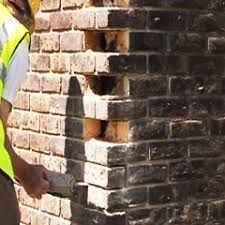
You’re standing in the yard, flashlight in hand, wondering whether that crack is harmless or the beginning of an expensive problem. Don’t guess from the crack alone. Read it by location, orientation, width, and movement.
This is a homeowner screening guide, not a substitute for an engineering evaluation or a complete masonry inspection. Use it to decide what to document, what to monitor, and when to call a professional.
For every crack, write down:
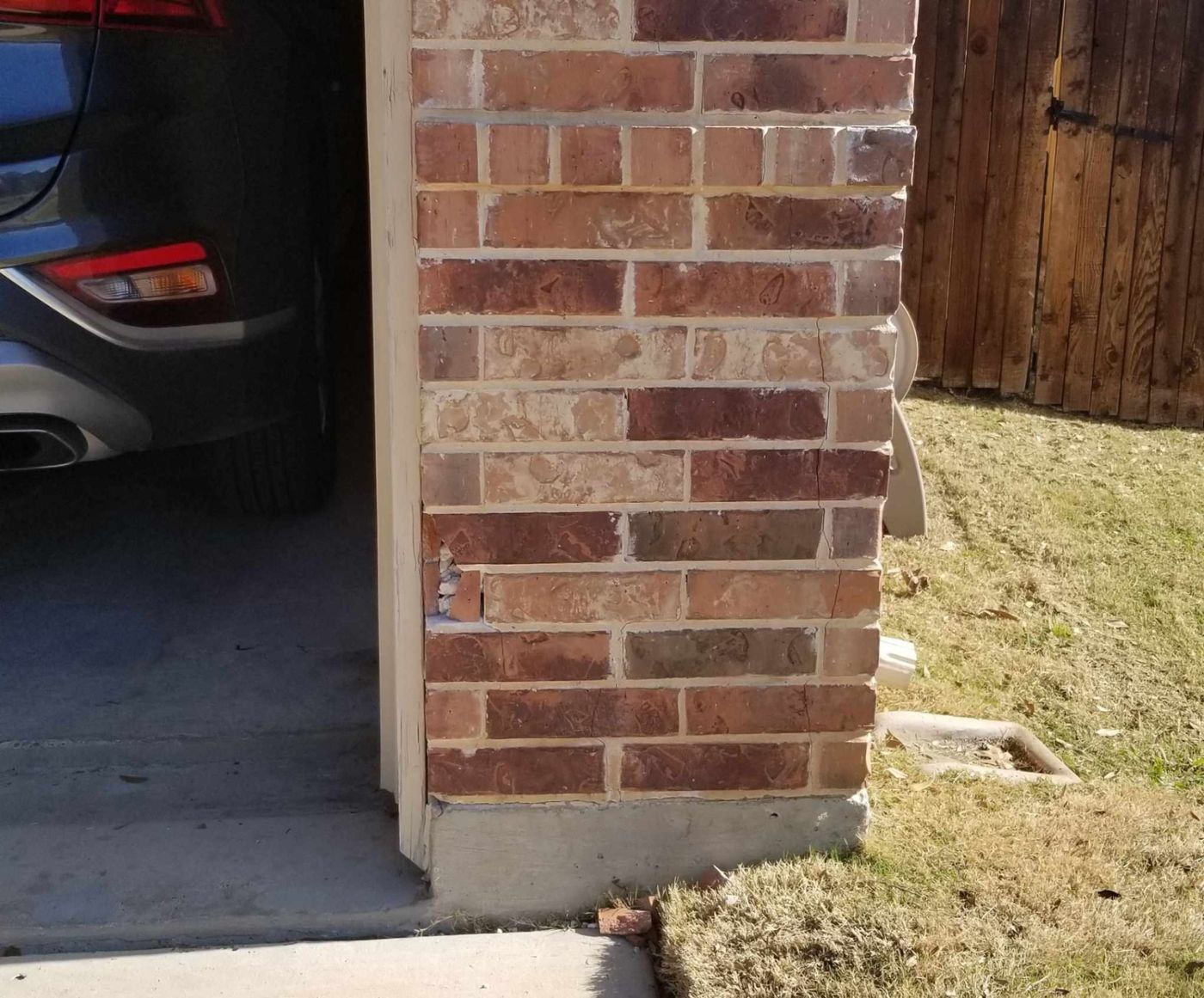
The direction of a crack gives you a useful first clue. It does not provide a final diagnosis by itself.
A narrow, straight crack running vertically through a mortar joint is often associated with:
Minor settlement
Thermal expansion and contraction
Mortar shrinkage
Localized movement between materials
A stable vertical crack under approximately 1/16 inch, especially when it stays in the mortar rather than cutting through the brick, is often a lower-priority issue.
Caution: A vertical crack that continues through the brick faces, widens quickly, or appears in several locations deserves professional evaluation.
Horizontal cracks are more concerning, particularly when they appear in the middle of a wall or are paired with bowing.
Possible causes include:
Lateral pressure
Wall movement
Foundation displacement
Water or soil pressure
Overloading
Deteriorated structural support
Do not automatically treat a horizontal crack as cosmetic. A horizontal crack with outward displacement is a prompt-inspection condition.
Diagonal cracks commonly run from the corner of a window, door, or garage opening. They may result from:
Thermal and moisture movement
Differential foundation movement
Movement around a lintel or header
Stress concentration at an opening
A narrow, stable diagonal crack may be minor. A widening diagonal crack, especially one that runs through brick units rather than only mortar, requires closer attention.
Stair-step cracks follow the mortar joints in a zigzag pattern. In North Texas, they are commonly associated with differential movement caused by expansive clay soils.
Pay attention to whether the crack:
Is wider at one end
Extends across several courses of brick
Appears near a corner or opening
Continues upward or downward over time
Is accompanied by brick separation or displacement
Stair-step cracks in brick are one of the clearest reasons to stop patching and arrange a professional assessment.
A crack in the middle of a broad wall may result from thermal movement, inadequate movement accommodation, settlement, or wall displacement. Measure it and check whether the wall is still flat.
If the wall bows outward or the crack runs horizontally, do not delay the inspection.
Corners concentrate stress because two wall planes meet and move differently. Cracks at outside corners can be related to:
Differential foundation movement
Thermal expansion
Poorly detailed movement joints
Impact damage
Separation between brick veneer and the structure
Look for gaps, loose brick, or a corner that appears out of plane.
Cracks above openings deserve special attention because the masonry is supported by a lintel, arch, or header.
A cracked brick above a window may be related to lintel deflection, corrosion, inadequate bearing, thermal movement, or foundation movement. Above a garage door, look for:
Stair-step cracking at the corners
Crushed or deteriorated mortar
A visibly sagging line of brick
Separation between the brick and the frame
Brickwork that appears to dip toward the center
Review our information on garage lintel repair and the LintleLOCK page when the crack is concentrated above a garage opening.
Cracking below a window may indicate movement at the sill, localized settlement, moisture damage, or stress around the opening. Check the window for:
Gaps at the frame
Sticking or binding
Water staining
Deteriorated mortar
Brick that has shifted outward
Cracks near the roofline can be caused by thermal movement, roof framing movement, inadequate ties, or water-related deterioration. Look for horizontal separation, outward displacement, and cracks that continue beneath the eaves.
Do not climb onto the roof to inspect a masonry crack unless you have the proper training and equipment.
Cracks close to the foundation may reflect slab or footing movement, differential settlement, drainage problems, or moisture changes in the soil. Check downspouts and grading, but do not assume drainage is the only cause.
Width is useful, but width alone is not a diagnosis. A narrow crack that is actively widening may matter more than a wider crack that has been stable for years.
Use these screening bands:
Hairline: Barely visible, often limited to the mortar surface.
Up to 1/16 inch: Frequently associated with minor movement, mortar shrinkage, or thermal cycling when stable.
1/16 to 1/4 inch: Document carefully and consider a professional evaluation, especially if the crack is diagonal, stair-step, horizontal, or through the brick.
Over 1/4 inch: Arrange a prompt professional assessment. This is especially important when the wall is displaced, the crack is growing, or multiple symptoms are present.
Tip: Place a ruler or measuring tape beside the crack in every photograph. A coin gives scale, but a ruler gives better information.
You can monitor a crack without opening it or filling it.
Clean loose dust from the surrounding surface.
Place a small strip of low-tack tape across the crack.
Mark the crack’s endpoints lightly with a pencil.
Photograph the crack with a ruler and a dated reference.
Repeat the photo after 30, 60, and 90 days, and after major droughts, heavy rain, or extreme temperature changes.
Compare the width, length, and condition of the tape.
If the tape tears, the pencil marks no longer align, or the crack extends beyond the original endpoints, document the change and schedule an evaluation.
The National Park Service notes: “Active cracks should be sealed with a flexible sealant; inactive cracks may be pointed.” First determine which condition you have. Do not seal a moving crack and call the problem solved.
North Texas soils can shrink during dry periods and expand after absorbing moisture. When different sections of soil move by different amounts, the foundation and brick veneer experience differential movement.
That movement commonly appears as stair-step cracks, diagonal cracks, separation at corners, and changes around openings.
Brick, mortar, steel, wood, and concrete do not expand and contract at exactly the same rate. Dallas–Fort Worth walls experience repeated heating and cooling throughout the year.
The Brick Industry Association addresses volume changes and movement in Technical Note 18. Stable, narrow cracks associated with seasonal movement may be less urgent, but recurring movement still needs proper detailing and repair.
A lintel supports masonry above a window, door, or garage opening. If it deflects, corrodes, lacks proper bearing, or moves relative to the wall, the brick above and beside the opening can crack.
That is why cracking above a garage door should not be dismissed as “just old mortar.” Identify the support condition before repairing the visible joint.
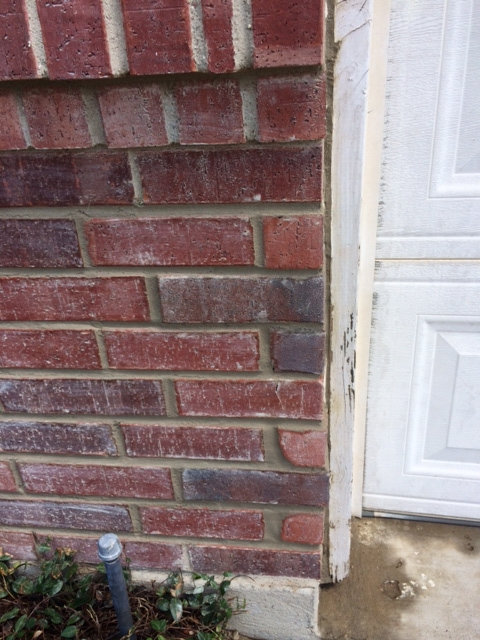
A cracked brick wall is not automatically structural. It becomes more concerning when several warning signs appear together:
The crack is widening or lengthening.
The crack is over 1/4 inch.
The crack is horizontal or stair-step.
The crack travels through brick faces.
Bricks are displaced, bulging, or pulling away.
Doors or windows suddenly stick.
The crack appears at several corners or openings.
There are gaps near the foundation or roofline.
Water is entering through the crack.
For more detail on the difference between surface damage and structural concerns, read our brick and mortar crack guide.
The wall is bowing, leaning, or visibly out of plane.
You see major horizontal cracking.
Cracks appear in several areas of the building.
There are foundation movement symptoms inside and outside.
The crack is large, rapidly changing, or through structural masonry.
You need an independent opinion for a sale, insurance claim, or major renovation.
The damage is localized to brick, mortar, a corner, chimney, arch, mailbox, or opening.
Bricks are spalling, missing, or cracked.
The wall needs accurate brick and mortar matching.
The issue involves a lintel, arch, or deteriorated mortar.
You need a repair after the structural cause has been identified.
Some projects need both. A masonry specialist can evaluate the visible brickwork and identify whether the pattern points beyond a localized repair.
Mortar or sealant can hide a crack, but it cannot correct soil movement, wall displacement, lintel movement, or poor drainage. If the cause remains active, the crack usually returns, sometimes wider and in a new location.
Don’t confuse a neat patch with a completed diagnosis. Determine whether the crack is moving, identify the likely mechanism, and then choose the appropriate repair.
For related conditions, see our pages on chimney mortar cap repair and spalled or missing brick replacement.
Photograph every crack with a date and scale.
Record the orientation, location, and width.
Mark the endpoints and monitor for movement.
Check for sticking doors, uneven floors, water entry, and displaced brick.
Do not fill or paint over the crack before it is evaluated.
Contact the appropriate professional if the crack is widening, displaced, horizontal, stair-step, or wider than 1/4 inch.
Need help determining whether your masonry needs attention? Request a quick and easy free online estimate from Champion Brick Repair & Whitestone Construction.
You can also call (817) 523-1540, text photos to (817) 523-1540, or leave a Google review after your project.
Canonical NAP: Champion Brick Repair & Whitestone Construction, Hamilton, Texas · (817) 523-1540 · serving Dallas–Fort Worth · championbrickrepair.com
Champion Brick Repair is a division of Whitestone Construction, Hamilton, Texas, and is not affiliated with any other companies using similar names.
Cracks are ugly — let Champion Brick Repair fix them right, with mortar matched to your home and a lifetime warranty.