September 29, 2026 · By Abraham Wix-Expert
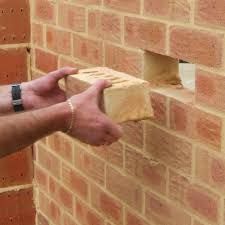
Spalled brick is not always a full-wall emergency. It is also not something to hide with a skim coat and a bucket of paint.
The practical question is simple: Can the existing brick remain, or has the unit lost enough of its face and strength that replacement is the correct repair? This guide explains how to decide, what proper replacement involves, and which conditions drive the cost of brick repair in Dallas.
Spalling occurs when the outer face of a brick flakes, pops, or separates from the body of the unit. Moisture entering the brick, temperature changes, freeze-thaw cycles, poor drainage, and deteriorated mortar can all contribute.
You do not need a full technical evaluation to make the first decision. Inspect the condition of the brick face and the surrounding wall. If the damage affects the brick itself, not just the mortar joint, replacement may be necessary.
See Champion’s missing and damaged brick repair service.
Use these criteria as a practical screening checklist. A qualified mason should make the final determination, especially near openings, corners, chimneys, arches, or structural supports.
If the outer face has separated from the brick body, the remaining material is no longer a reliable weathering surface. A thin fragment may still appear attached, but it can continue to loosen and allow water into the wall.
Do not treat a detached face as a cosmetic defect. Remove the unit and install a sound replacement.
Pressing a brick with your finger is not a laboratory test, but it can reveal obvious deterioration. If the surface powders easily, breaks apart, or sounds hollow in multiple areas, patching the face will not restore the brick’s original strength.
A soft brick can absorb more water and deteriorate faster. Replacement is usually the more durable option.
A crack limited to the mortar joint may call for repointing. A crack that runs through the brick body is different. It can indicate impact, movement, thermal stress, or internal deterioration.
Replace the unit when the crack divides the brick, extends across a corner, or continues through the face and bed surfaces.
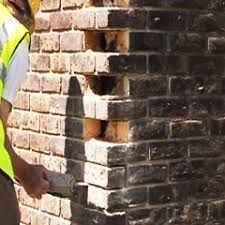
If the spalled area creates a cavity, open plane, or path behind the brick face, moisture can reach the wall assembly. That moisture may affect adjacent mortar, flashing, sheathing, or other masonry units.
The goal is not merely to make the front look flat. The repair must restore the wall’s weather-resisting surface.
Corners, window openings, garage openings, door openings, and wall terminations experience additional stress and water exposure. A damaged corner brick can affect the bond and alignment of nearby units.
Have the area evaluated before replacing only the visible face. Damage at an opening may be connected to movement, failed flashing, a lintel issue, or a larger masonry problem.
If someone previously filled the damaged face with mortar, cement, epoxy, or another patching product and the repair has cracked or separated, remove the failed material and reassess the brick.
A failed patch is useful information: it shows that the underlying unit was not sound or that moisture and movement were never corrected.
A brick may remain when the damage is shallow, stable, and limited to the surface without affecting the unit’s bond or ability to shed water.
A mason may recommend leaving the brick in place when:
The brick body remains hard and intact.
The face is not detached or hollow.
No crack passes through the unit.
Water cannot enter behind the damaged area.
The damage is minor and does not involve a corner or opening.
The surrounding mortar joints are sound or can be properly repointed.
There is no evidence of active moisture intrusion or structural movement.
The correct repair might involve carefully removing deteriorated material, repointing adjacent joints, and correcting the water source. That is different from simply spreading mortar over a failing brick face.
Tip: If you can see a distinct layer separating from the brick, assume the face is no longer dependable until a masonry professional confirms otherwise.
Mortar skimming can make a damaged brick look better for a short time. It does not turn a deteriorated brick into a sound one.
The shortcut creates several problems:
It traps moisture. Dense patches or paint can slow drying and hold water against the damaged unit.
It hides active deterioration. The brick may continue to break down behind the coating.
It creates a visual mismatch. A flat patch rarely reproduces the texture, firing marks, edges, and color variation of the original brick.
It can fail differently from the wall. Brick, mortar, paint, and patching compounds absorb and expand at different rates.
It complicates future repair. A contractor must remove the coating before accurately assessing the brick.
Caution: Do not paint over spalled brick before identifying the moisture source. Paint may conceal worsening damage until the repair becomes larger and more expensive.
Professional Dallas brick repair should be controlled, clean, and compatible with the existing wall. The basic process usually follows these steps.
Cover nearby doors, windows, vehicles, landscaping, walkways, and adjacent finishes. Establish a safe work zone and control dust and debris.
If the work is near a shared wall or close to a neighbour’s property, discuss access and protection before demolition begins.
The brick should be removed without unnecessarily disturbing sound surrounding units. A mason may use hand tools, a grinder with dust control, or other appropriate equipment depending on the location and condition.
Do not simply hammer the face inward. That can damage the surrounding bond and enlarge the opening.
Remove loose mortar and debris. Inspect the cavity, adjacent bricks, wall ties where accessible, and any visible moisture path.
The opening must be clean and stable before the replacement unit is installed. If water is entering from flashing, a roof edge, a gutter, a chimney cap, or failed sealant, correct that condition as part of the repair plan.
The replacement brick must match more than color. Check:
Length, height, and depth
Texture and firing characteristics
Edge profile
Color variation
Weathering and surface finish
Bond pattern and orientation
Use compatible bed and head mortar. The mortar should suit the existing masonry in strength, color, texture, and permeability. Hard, overly dense mortar can damage older or softer brick as the wall moves and weathers.
Set the replacement unit so its face aligns with the surrounding course. Maintain the correct bed and head joints, bond pattern, and orientation.
A replacement that sits too proud or too deep may be structurally serviceable but visibly wrong. Alignment matters.
Tool the mortar joints after the mortar reaches the proper firmness. Match the surrounding joint profile, concave, flush, weathered, struck, or another existing finish.
Joint width matters, too. Even a close brick match can look out of place if the joint profile and depth do not match.
Remove mortar residue carefully without spreading it across the brick face. Avoid aggressive cleaning that damages the replacement unit or surrounding historic masonry.
The finished repair should be evaluated after the mortar has cured and the wall has dried. Color can change during curing.
There is no reliable one-price answer because the brick is only one part of the work. Local cost guides commonly show isolated replacement in the low tens of dollars per unit and small repair projects ranging from several hundred dollars into the low thousands. Use those figures only as planning context, not as a substitute for a free inspection or free evaluation.
The main cost factors include:
Number of units: Replacing one accessible brick is different from removing several courses or a broad group of deteriorated units.
Height and access: Second-story walls, chimneys, tight side yards, rooflines, and difficult staging may require ladders, scaffolding, lifts, or additional protection.
Brick sourcing and matching: Common modern brick is easier to source. Older Dallas walls may use discontinued sizes, handmade-looking textures, or regional blends.
Custom mortar matching: Mortar color, aggregate, joint profile, and weathering all affect labor. A match may require test samples rather than one off-the-shelf bag.
Surrounding repointing: Deteriorated joints around the replacement may need to be removed and repointed so water does not enter beside the new unit.
Water-source correction: Failed flashing, leaking gutters, roof runoff, chimney defects, grading, and other moisture sources can add necessary work.
Damage at structural locations: Corners, arches, lintels, openings, and chimneys require more careful evaluation than a flat, ground-level wall.
Cleanup and protection: Dust control, landscaping protection, shared access, and disposal add time even when only a few bricks are replaced.
A proper masonry repair estimate in Dallas, TX should explain these variables instead of quoting only a per-brick price.
Older Dallas homes often contain brick that is no longer manufactured. Even when a new brick has the same nominal dimensions, its texture, color range, and edge treatment may be noticeably different.
A skilled contractor may source salvaged brick, search discontinued inventory, use a close blend, or place the closest match in a less prominent location. Mortar matching is equally important because weathered mortar can be lighter, darker, softer, or more textured than new mortar.
For historic properties, avoid replacing a small damaged area with a bright, uniform modern brick without testing the match first. Review Champion’s Dallas brick repair and historic masonry service for more information about matching older brick, stone, and mortar.
Before approving the work, ask:
Will you replace the entire damaged unit or cover the face?
How will you determine whether the brick is structurally sound?
How will you protect nearby property and control dust?
What brick will you use, and how will you match its size, texture, and color?
Will you provide mortar samples or explain the matching process?
Will you inspect for water entry or related masonry movement?
Are surrounding joints included in the scope?
How will you match the existing bond and joint profile?
What happens if the replacement exposes hidden damage?
Is the repair backed by a written warranty?
Can you provide photographs of comparable completed work?
For related information, review Champion’s guides to brick crack repair and chimney mortar cap repair. If you are searching for brick crack repair near me, make sure the contractor evaluates the cause, not just the visible line.
If your brick face is detached, soft, cracked through, open to water, located at a corner or opening, or covered by a failed patch, replacement is usually the safer long-term direction. If the unit remains sound, a targeted masonry repair may be enough.
Champion Brick Repair & Whitestone Construction provides accurate brick matching, mortar matching, localized spalled brick replacement, and related masonry repairs throughout the Dallas–Fort Worth area. Request a quick and easy free online estimate, schedule a free inspection or free evaluation, or text photos to (817) 523-1540.
If our work helped protect or restore your masonry, please leave a Google review.
Champion Brick Repair is a division of Whitestone Construction, Hamilton, Texas, and is not affiliated with any other companies using similar names.
Cracks are ugly — let Champion Brick Repair fix them right, with mortar matched to your home and a lifetime warranty.