July 3, 2026 · By Abraham Wix-Expert
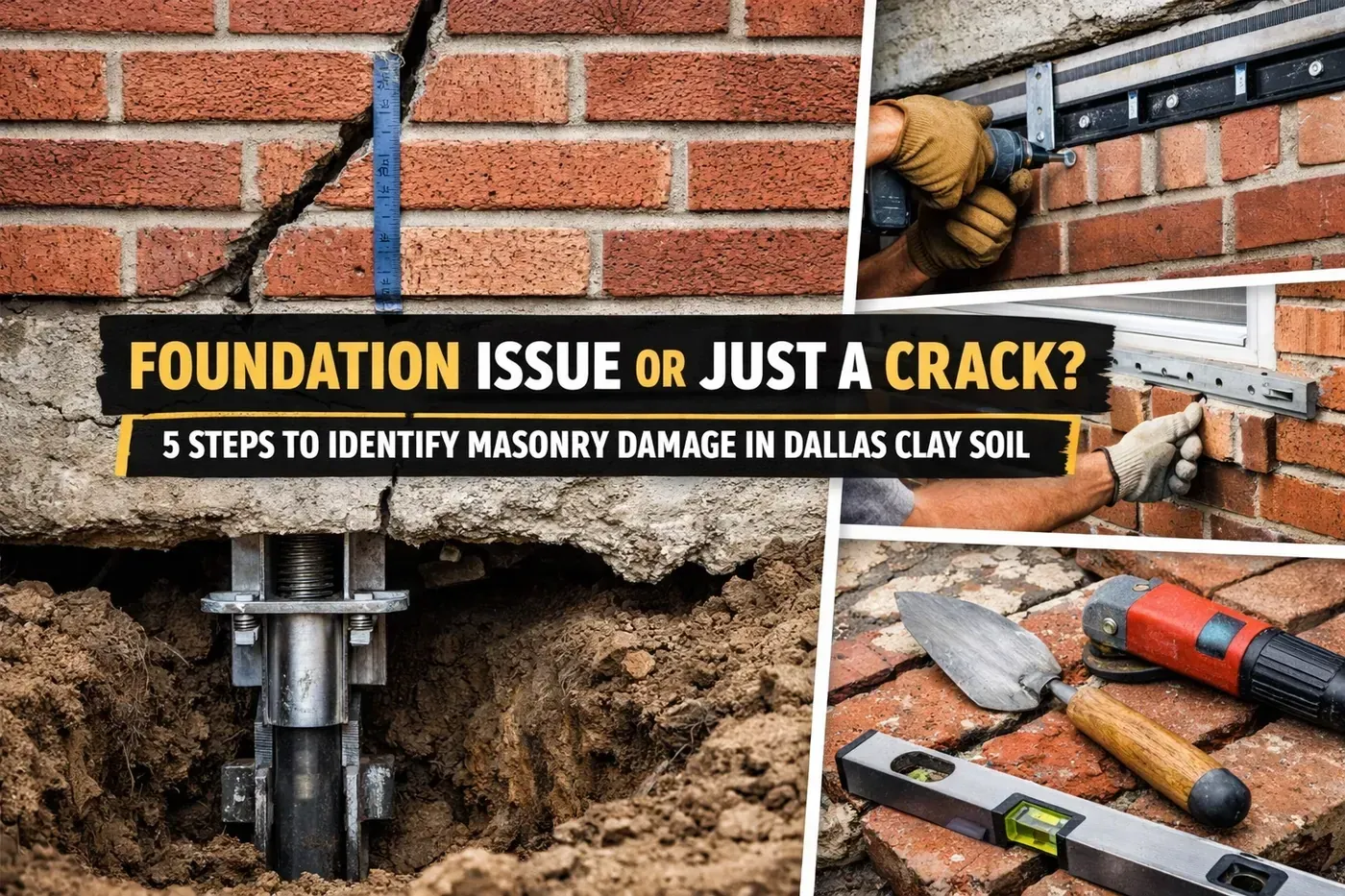
For a Dallas homeowner, discovering a crack in your exterior brickwork can be a stressful moment. Your mind immediately jumps to the worst-case scenario: foundation failure. However, not every crack is a sign of a structural catastrophe. In the North Texas region, masonry undergoes significant stress due to our unique environment.
Understanding the difference between a cosmetic "settlement" crack and a serious structural issue is the first step toward protecting your investment. At Champion Brick Repair & Whitestone Construction, we specialize in identifying these nuances and providing long-term solutions that maintain the aesthetic and structural integrity of your home.
If you are concerned about new gaps in your masonry, call us today at (817) 523-1540 for a professional evaluation.
Before diving into the steps, it is essential to understand why Dallas homes are so prone to masonry issues. Dallas sits atop the Blackland Prairie, a region characterized by heavy, expansive clay soil. This soil acts like a sponge. When it rains, it absorbs water and expands. During our frequent North Texas droughts, it loses moisture and shrinks.
This "shrink-swell" cycle can cause the soil volume to fluctuate by as much as 10%. This constant movement exerts thousands of pounds of pressure against your foundation and the brick veneer of your home. Over time, this movement manifests as cracks.
The size of the crack is your first and most objective clue. While no crack should be completely ignored, the width provides a clear baseline for urgency.
Hairline Cracks (less than 1/16 inch): These are common in almost all homes and usually result from the natural drying process of mortar or minor seasonal settling.
Moderate Cracks (1/8 inch to 1/4 inch): These warrant closer observation. They may indicate that the soil is shifting more than usual.
Serious Cracks (greater than 1/4 inch or 15mm): According to engineering standards, cracks of this size often indicate significant foundation movement. These gaps allow water to penetrate behind the brick ledge, which can lead to wood rot, mold, and further masonry degradation.
Tip: Use a ruler or a digital caliper to document the width. Take photos with the ruler in the frame so you can track if the crack is widening over time.
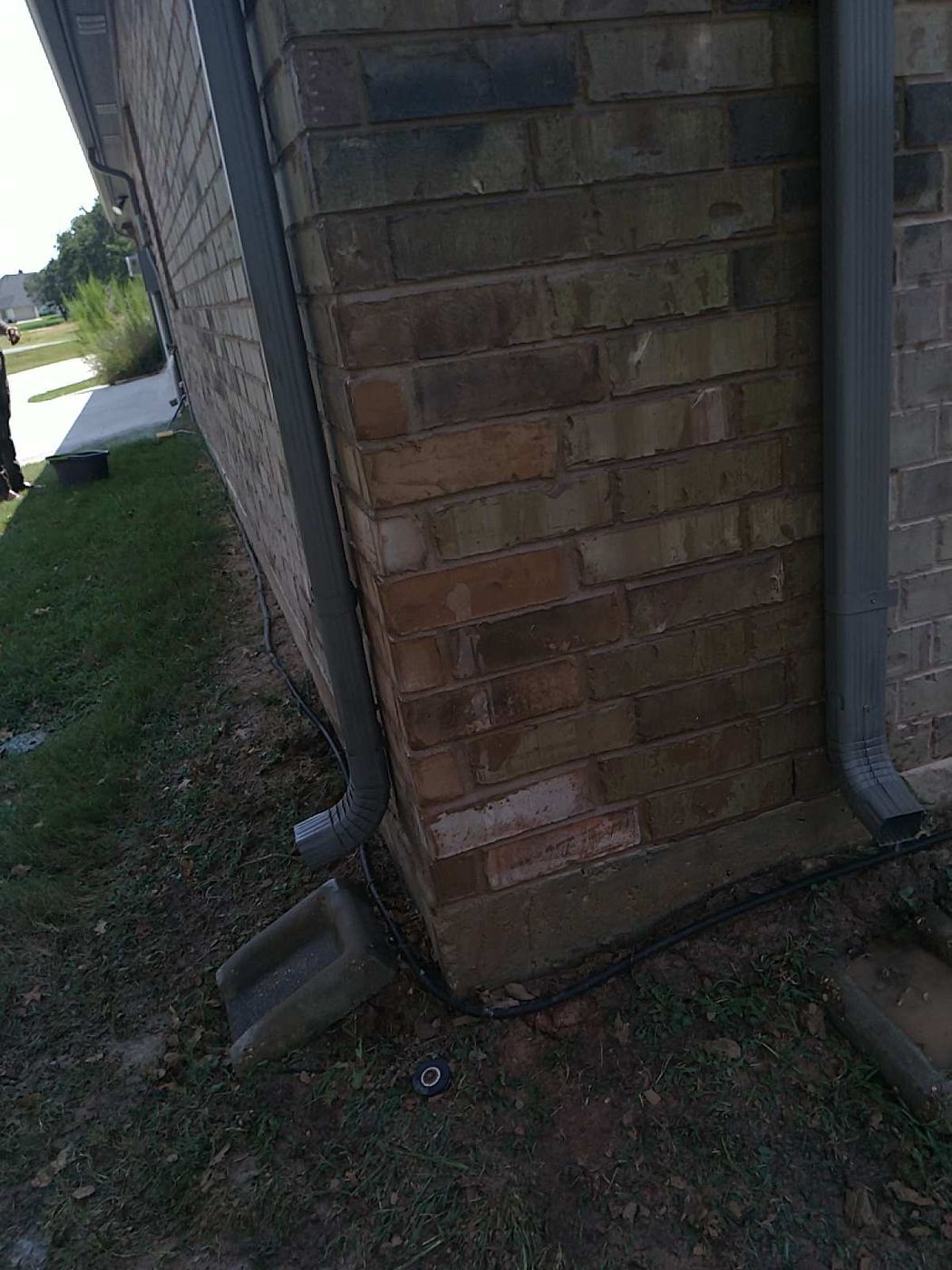
The shape and direction of a crack tell a story about where the stress is coming from. Not all cracks are created equal.
Vertical Cracks: Often found near corners, these can be caused by the thermal expansion of the brick. Brick expands in the heat, and if the original builder did not include proper expansion joints, the brick will "pop" vertically.
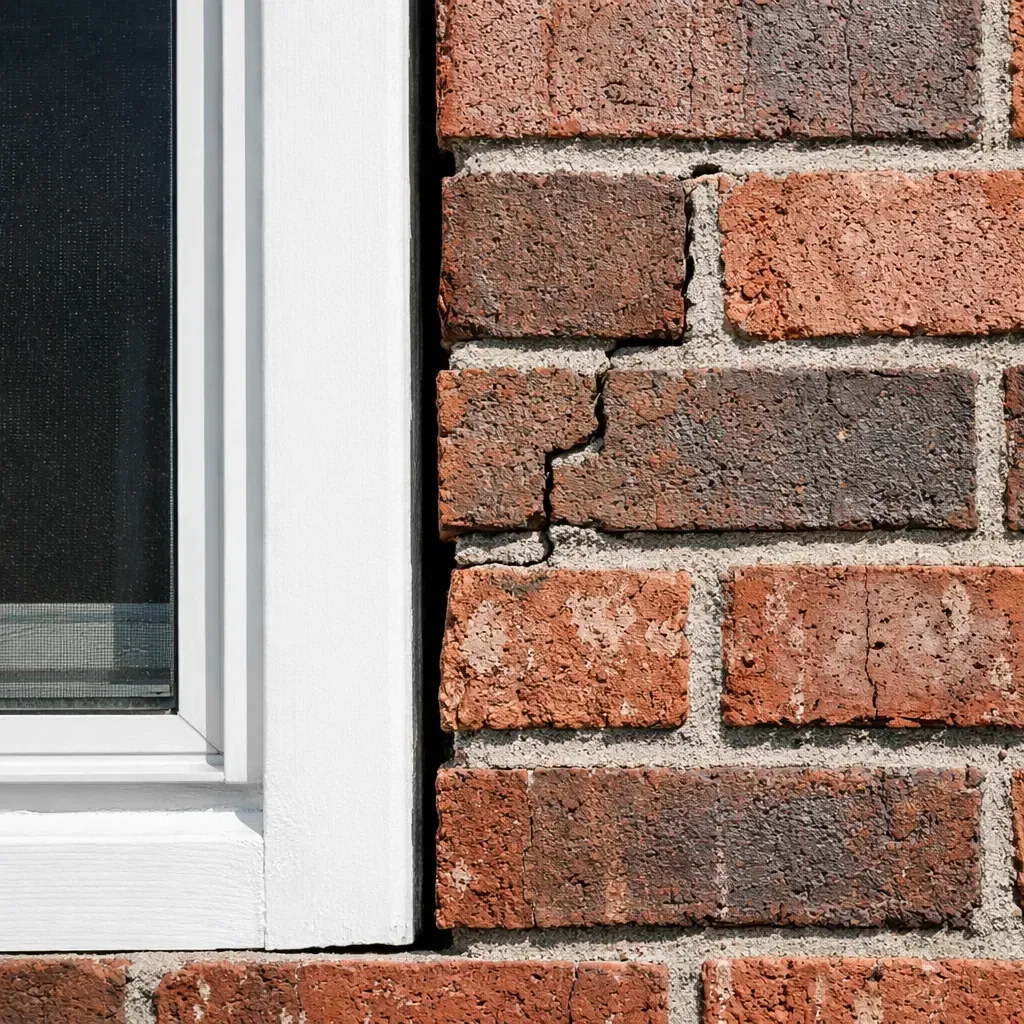
Stair-Step Cracks: This is the classic sign of foundation settlement. The crack follows the mortar joints (the path of least resistance) in a zig-zag pattern. If you see stair-step cracks near the corners of your home or above windows, the foundation is likely sinking in that specific area.
Horizontal Cracks: These are less common but very serious. They often indicate that the foundation is bowing or that there is significant hydrostatic pressure from the soil pushing the wall inward.
Diagonal Cracks (45-degree angle): These are high-priority signs of severe movement. When you see diagonal cracks radiating from the corners of door frames or windows, the structural load of the house is shifting.
Caution: Don't assume a stair-step crack is "just the mortar." While the bricks themselves may be intact, the separation of the mortar joints indicates that the wall is no longer a single, cohesive unit.
Masonry damage rarely happens in a vacuum. If your foundation is shifting enough to crack your brick, you will likely see evidence inside and around the house. Perform a "walk-around" and check for the following:
Sticking Doors and Windows: Are your doors suddenly hard to latch? Do your windows require extra force to open? This suggests the frames are no longer square.
Interior Drywall Cracks: Look above doors and in the corners of ceilings. If the interior cracks mirror the exterior masonry cracks, you have a structural movement issue.
Gaps in Trim: Check where the frieze board (the wood trim at the top of the brick wall) meets the masonry. If you see a widening gap, the wall may be rotating or sinking.
Uneven Floors: If you feel like you’re walking slightly uphill in certain rooms, it’s time to call an expert.
When did you first notice the crack? In Dallas, the timing is a major factor.
If you notice cracks appearing in August or September after a long, dry summer, it is likely due to the clay soil shrinking away from the foundation. Conversely, cracks that appear after a very wet spring suggest the soil is expanding and pushing upward (heaving).
Location is also key. Cracks near "points of weakness," such as garage door headers, window lintels, or large arches, are common. However, cracks in the middle of a long, solid expanse of wall are more concerning as they suggest the entire slab is flexing.
If you are searching for brick crack repair near me, you need a team that understands these seasonal cycles. Champion Brick Repair & Whitestone Construction provides specialized Dallas brick repair services designed specifically for the challenges of North Texas geology.
Many homeowners attempt to fix cracks themselves with a tube of caulk or a bag of pre-mixed mortar from a big-box store. This is a mistake for two reasons:
Masking the Problem: Patching a crack without addressing the underlying cause is like putting a band-aid on a broken leg. If the foundation is still moving, the patch will fail within months.
Aesthetic Ruin: Standard mortar rarely matches the aged mortar on your home. Most DIY repairs result in "scarring", unsightly grey streaks that permanently devalue your home's curb appeal.
At Champion Brick Repair & Whitestone Construction, we don't just fill gaps. We perform a comprehensive assessment to determine if you need masonry stabilization or if the repair can proceed with our proprietary color-matching system.
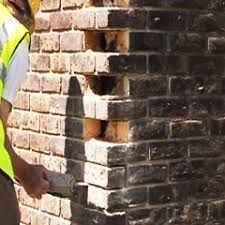
When you choose a professional for Dallas brick repair, you are paying for more than just labor; you are paying for an exact match. One of the biggest challenges in North Texas is that the sand and lime used in mortar 20 or 30 years ago are no longer available in the same form.
Our technicians are experts at custom-blending mortar to match the existing texture and hue of your home. We ensure that once the repair is complete, the "scarring" is non-existent. We take pride in our ability to make your home look as if the damage never occurred.
Champion Brick Repair & Whitestone Construction are BBB Accredited Businesses. This accreditation reflects our commitment to the BBB Code of Business Practices and our dedication to providing honest, high-quality service to every homeowner we serve. Click for review to see how we’ve helped your neighbors across the DFW Metroplex.
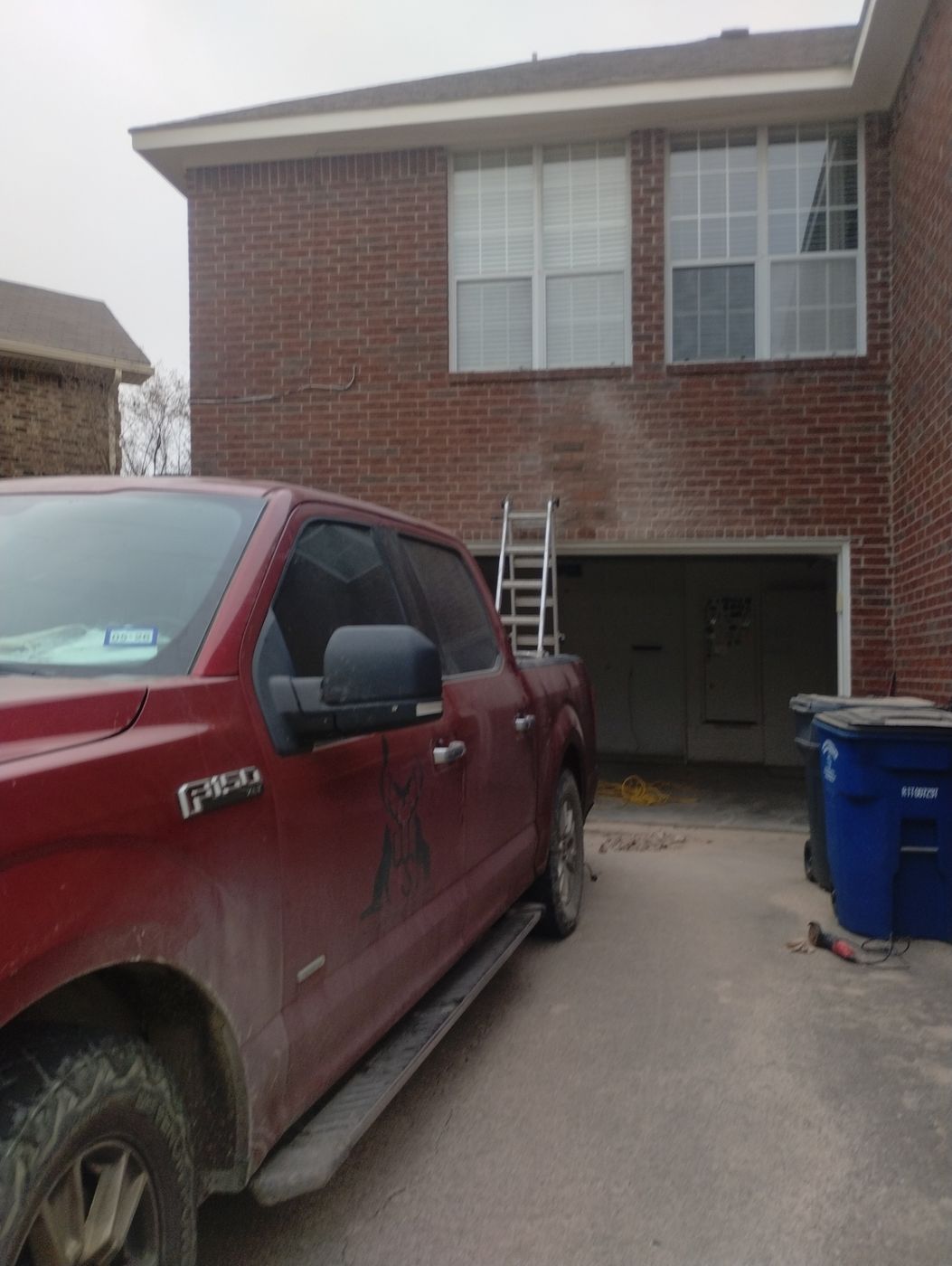
In the world of masonry, a small crack today is a large repair bill tomorrow. Water infiltration through masonry cracks is the leading cause of secondary home damage in Dallas. Once water gets behind your brick, it can rot your wooden studs, destroy insulation, and create a breeding ground for mold.
Whether you have a minor aesthetic concern or a major structural worry, getting an expert opinion is the smartest move you can make.
Ready to restore your home’s beauty and safety? Contact Champion Brick Repair & Whitestone Construction today at (817) 523-1540 or visit our services page to learn more about how we handle complex masonry repairs.
We value your feedback! If we have worked on your home recently, please leave us a review here: Leave a Google Review.
Champion Brick Repair is a division of Whitestone Construction, Hamilton, Texas, and is not affiliated with any other companies using similar names.
Cracks are ugly — let Champion Brick Repair fix them right, with mortar matched to your home and a lifetime warranty.