September 28, 2026 · By Abraham Wix-Expert
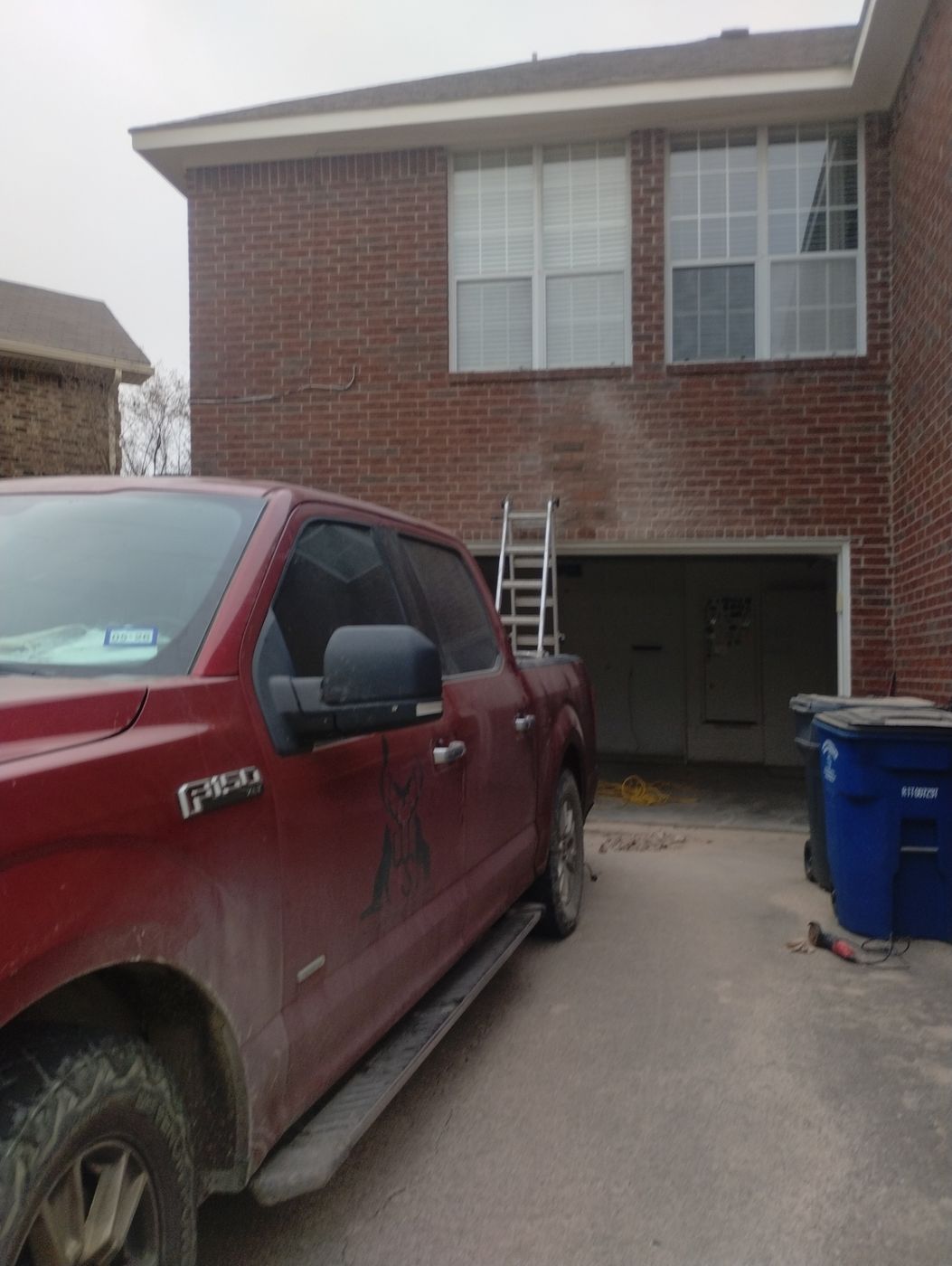
Fall is the peak repair window for masonry in Dallas–Fort Worth. From September through November, temperatures are usually mild enough for mortar to cure steadily, crews can work outdoors without summer heat stress, and winter freezing is not yet interfering with fresh repairs.
If your brickwork has open mortar joints, cracks, spalling, or movement above the garage door, get it evaluated before winter. Waiting until spring can turn a manageable repair into a larger brick replacement project.
Masonry repair depends on more than a dry forecast. Mortar needs the right conditions to hydrate, bond, and gain strength.
For most repair work, the preferred air and material temperature is approximately 40°F to 90°F, with 60°F to 80°F providing a particularly favorable curing range. Fresh mortar should also be protected from freezing during its first 24 to 48 hours.
Fall usually threads the needle:
Temperatures are more consistent than during summer.
Mortar does not dry out as aggressively as it can in direct Texas heat.
There is less immediate risk of freezing before the mortar sets.
Crews can work outside without extreme heat stress.
Homeowners avoid the ice and cold-weather protection issues that complicate winter work.
Tip: Check nighttime lows, not just daytime highs. If temperatures may fall below 40°F after a repair, the work may require additional protection or a schedule adjustment.
Mortar is not simply “drying.” Cement in the mortar is chemically reacting with water through hydration. That process helps create the bond and strength needed to hold the masonry together.
Dallas summers can create several problems:
Water evaporates from the mortar too quickly.
The surface may dry before the interior has properly hydrated.
The mortar can develop a weaker bond with the brick.
Rapid drying may contribute to a brittle or poorly bonded repair.
Direct sun and wind can make conditions even harsher.
That does not mean every summer repair fails. It means the installer must control moisture, shading, material temperature, and curing conditions carefully.
Fresh mortar is vulnerable before it has set and gained adequate strength. If water inside the mortar freezes, ice crystals disrupt the developing cement matrix. The result can be permanent strength loss, poor bond, scaling, and premature deterioration.
Water expands by approximately 9 percent when it freezes. In a crack, open mortar joint, or saturated brick, that expansion creates pressure that pushes the surrounding masonry apart.
The Brick Industry Association’s technical notes address movement, expansion joints, veneer support, and masonry detailing. These principles matter during repair because the goal is not merely to make a wall look better. The goal is to restore a durable system that can accommodate moisture and temperature movement.
Inspect mortar joints for erosion, gaps, crumbling, or areas where the mortar has pulled away from the brick. Repointing involves removing deteriorated mortar to a controlled depth, cleaning the joint, and installing properly matched new mortar.
Do not smear new mortar over failing material. That approach hides the problem without restoring the joint.
Learn more about professional repointing and tuck-pointing in Dallas.
Look closely above the garage door. Horizontal cracks, stepped cracks, displaced brick, crushed mortar joints, or a visible dip can indicate a failing lintel.
A sagging garage lintel is not always just a crack-repair issue. The steel angle may be rotating outward because of inadequate attachment, insufficient bearing, or torsional movement. Standard angle iron added without correcting the twist is often only a band-aid.
Champion Brick Repair uses LintleLOCK to correct rotational lintel failure, restore the lintel’s position, and lock it permanently to prevent recurrence. LintleLOCK is the only permanent, patented system for sagging lintels, and its purpose is to reverse rotational sagging, not simply patch the visible cracks. The system includes a lifetime warranty.
Read the garage lintel rotation and repair guide.
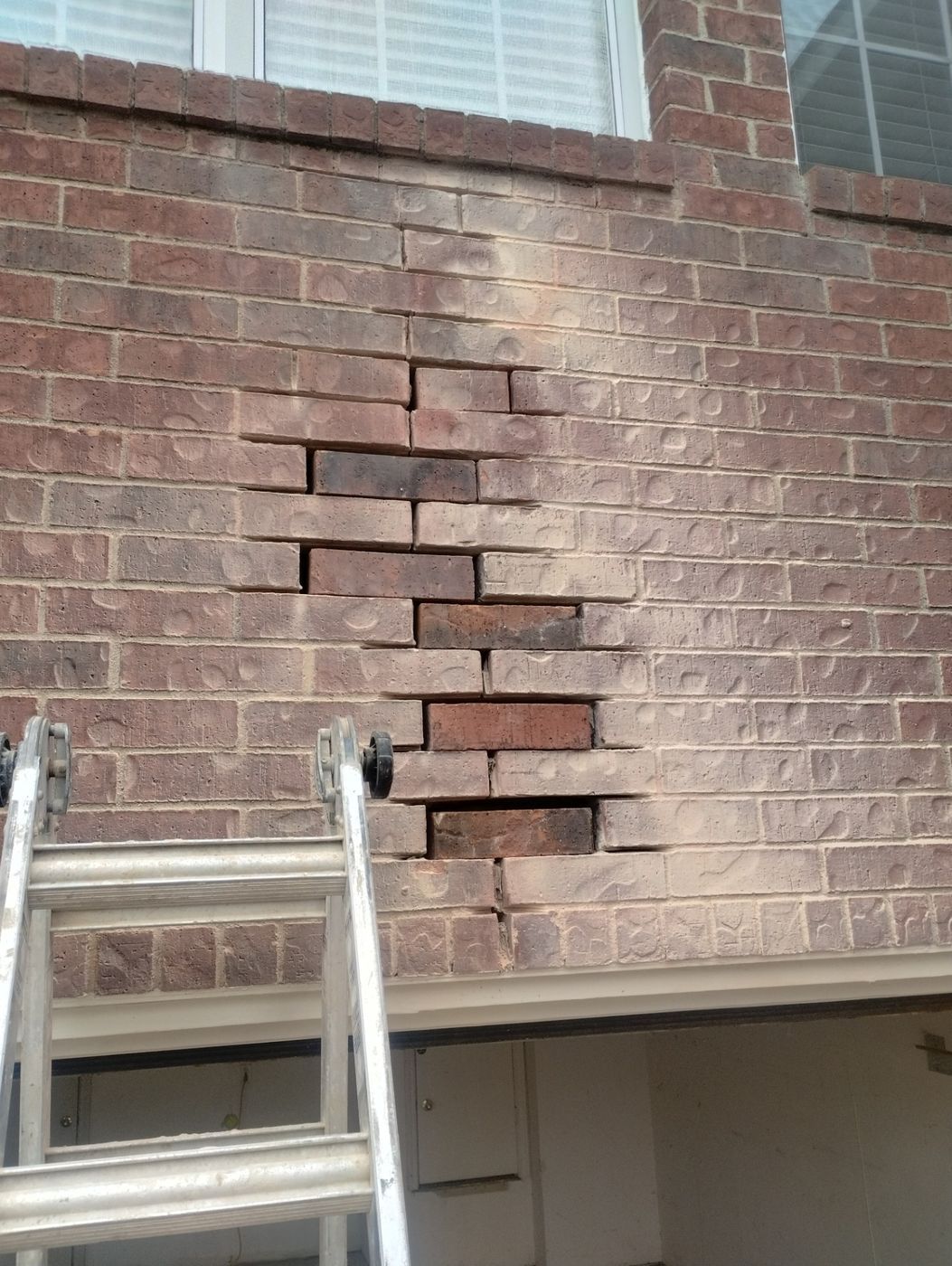
“The visible crack is often the symptom. The movement behind the brickwork is the problem.”
Not every brick crack has the same cause. Some result from normal movement, while others point to settlement, moisture intrusion, a failing lintel, or inadequate movement accommodation.
Record the crack’s location, direction, width, and whether it continues through multiple courses. A crack over an opening deserves closer attention than an isolated hairline crack in a single mortar joint.
See the brick and mortar crack repair information before deciding whether a cosmetic patch is appropriate.
Spalling occurs when the face of a brick flakes, pops off, or breaks away. Moisture intrusion and freeze-thaw exposure can accelerate the damage, especially where brick is already saturated.
Replace severely deteriorated units rather than covering them with mortar or paint. A proper repair includes matching the replacement brick’s:
Color
Size
Texture
Face pattern
Weathering
Mortar color and joint profile
Review the missing and spalled brick replacement service.
Schedule chimney mortar cap repair before Thanksgiving and Christmas. This is when many homeowners light the first fire of the season, and a cracked or deteriorated cap can allow water into the chimney masonry and flue.
The cap is a horizontal surface exposed to rain, debris, temperature changes, and repeated wetting and drying. Repair may involve:
Repointing deteriorated cap joints
Replacing damaged brick
Rebuilding a failing mortar cap
Correcting water-shedding details
Repairing or replacing damaged chimney sections
A chimney cap that looks slightly cracked from the ground may have more extensive water damage above the roofline. Have it evaluated before using the fireplace regularly.
See the chimney mortar cap repair service.
Fall is also a practical time to repair a damaged brick mailbox before holiday deliveries increase. Common repairs include matching brick, replacing the insert, repairing address blocks, and replacing damaged flags.
Do not ignore a loose mailbox surround. Water can enter open joints, and freeze-thaw movement can widen the damage.
Walk around your property and check the following areas:
Mortar joints: Look for gaps, crumbling, deep erosion, or loose material.
New cracks: Note vertical, horizontal, stepped, and diagonal cracks.
Above garage doors: Look for sagging brick, displaced units, or crushed joints.
Chimney cap: Check for cracks, missing mortar, ponding water, and loose brick.
Weep holes: Make sure they are open and not blocked by mortar, soil, or debris.
Downspouts: Confirm that water discharges away from the foundation and masonry.
Grading: Make sure soil and hardscape slope away from the house.
Spalling: Look for brick faces that are flaking, bulging, or missing.
White powder: Efflorescence may indicate moisture moving through the masonry.
Mailboxes and walls: Check for loose units, open joints, leaning sections, or impact damage.
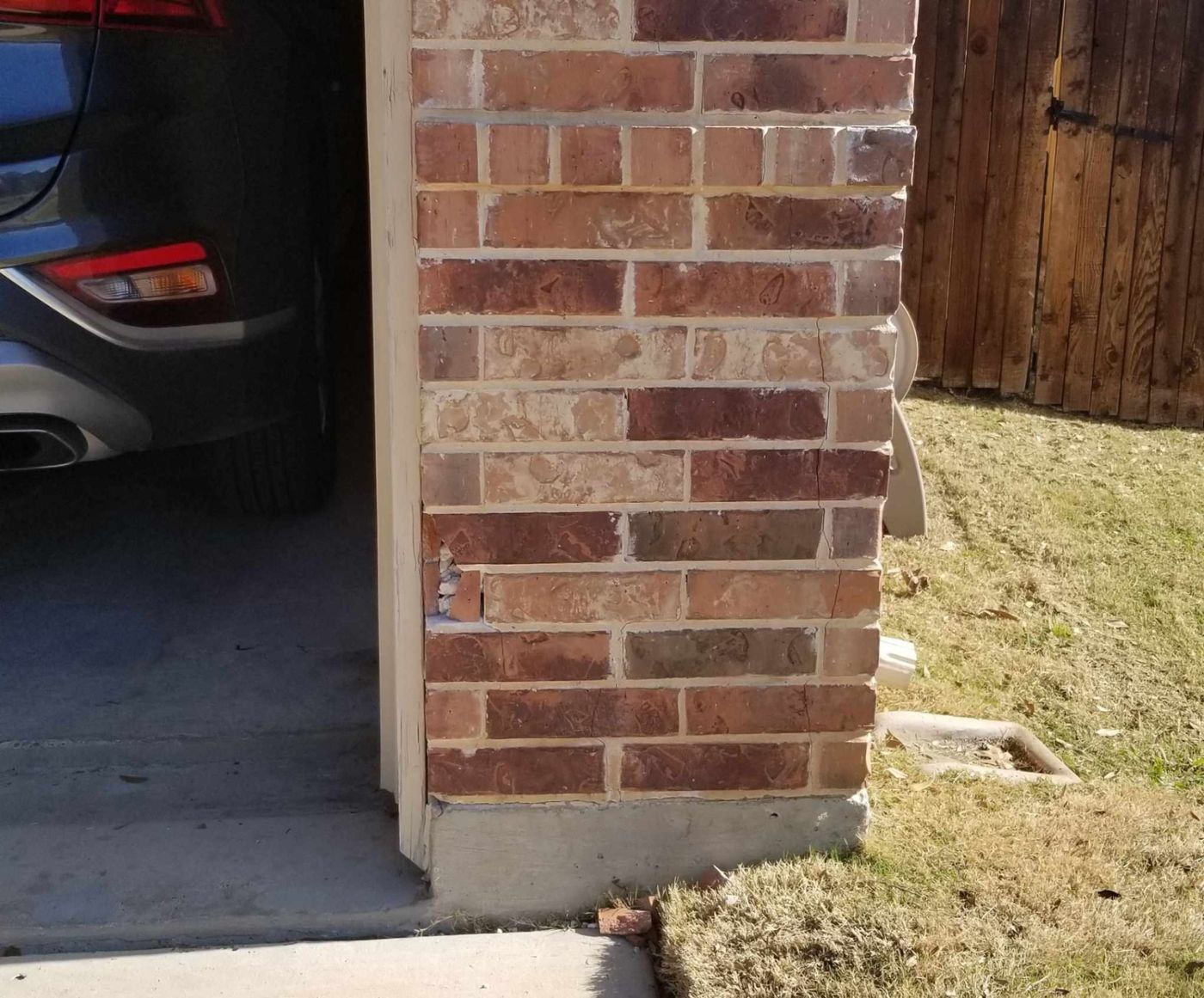
Caution: Do not pressure-wash damaged brick or open mortar joints before an evaluation. High-pressure water can drive moisture deeper into the wall and remove additional mortar.
A crack or open joint gives water a path into the masonry. When freezing temperatures arrive, that water expands and presses against the brick and mortar. Repeated freeze-thaw cycles can widen the crack, loosen adjacent bricks, and convert a repointing project into brick replacement.
Repairs completed in fall on otherwise sound brick are almost always less expensive than the same repair in spring after a freeze cycle. The difference is simple: fall work addresses the opening before winter moisture can exploit it.
Fall scheduling also fills quickly. Once temperatures become inconsistent, repairs may require additional protection, shorter work windows, or postponement until conditions improve.
If you need brick repair Dallas homeowners can rely on, do not wait for the first hard freeze to expose the problem. Champion Brick Repair & Whitestone Construction provides masonry repair Dallas TX property owners need, including repointing, brick crack repair, garage lintel correction, spalled brick replacement, chimney mortar cap repair, and brick mailbox repair Dallas TX.
Start with a quick and easy free online estimate, request a free inspection or free evaluation, or text photos to (817) 523-1540. For workmanship completed by our team, you can also leave a Google review.
Champion Brick Repair & Whitestone Construction Hamilton, Texas · (817) 523-1540 · serving Dallas–Fort Worth · championbrickrepair.com
Champion Brick Repair is a division of Whitestone Construction, Hamilton, Texas, and is not affiliated with any other companies using similar names.
Cracks are ugly — let Champion Brick Repair fix them right, with mortar matched to your home and a lifetime warranty.