January 28, 2026 · By Abraham Wix-Expert
Brick cracks happen. In Dallas-Fort Worth, the combination of expansive clay soil, temperature swings, and occasional foundation movement makes cracked brick and mortar an inevitability for most homeowners.
The real problem isn't that cracks appear, it's what happens next.
Too many well-intentioned homeowners grab a tube of caulk or a bag of quick-set mortar from the hardware store, watch a five-minute YouTube video, and make repairs that actually accelerate the damage. What started as a hairline crack becomes a structural headache within a few years.
Here are the seven most common brick crack repair mistakes we see across Dallas homes, and how to avoid each one.
This is the single most damaging DIY error.
Modern cement-based mortars (Type S, Type N) are widely available at big-box stores. They're also completely wrong for most residential brick repair work, especially on homes built before 1990.
Here's why: older bricks are softer and more porous. They were designed to work with lime-based mortar, which flexes slightly and allows moisture to escape. Modern Portland cement mortar is harder than the brick itself. When the wall expands and contracts (which it does constantly in Texas heat), the cement doesn't give. Instead, the brick cracks and spalls.
Caution: Applying the wrong mortar doesn't just look bad, it causes irreversible damage to the surrounding brick. You may void any chance of a clean repair later.
The right approach is to match the mortar composition,ite texture, and color to what's already on your home. This requires testing and experience, not guesswork.
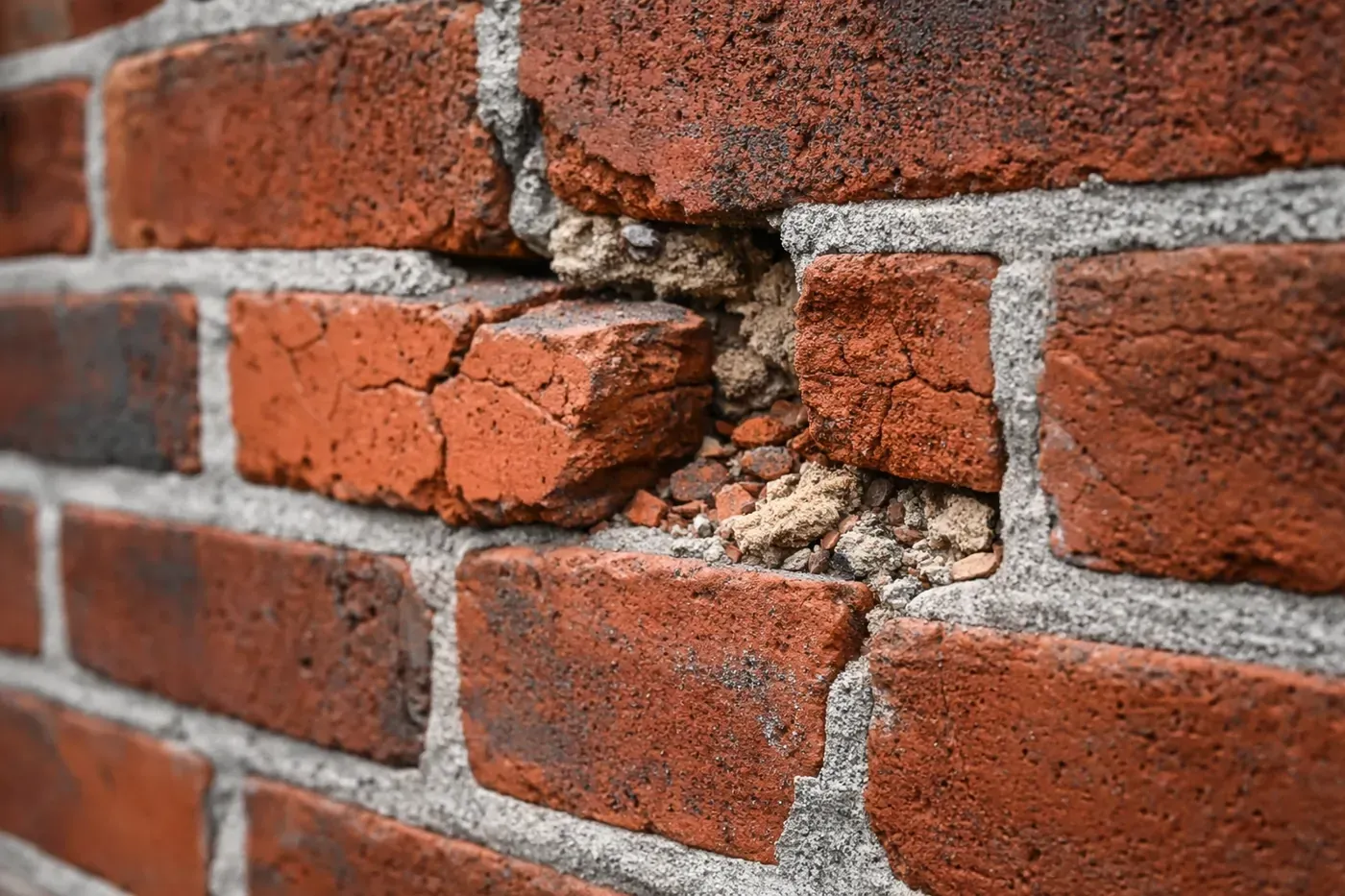
Patching a crack without understanding why it appeared is like putting a bandage on a broken bone.
Cracks in brick and mortar don't happen randomly. Common causes include:
Foundation settling or movement (extremely common in North Texas clay soil)
Water infiltration from failed flashing, clogged gutters, or poor grading
Thermal expansion from prolonged sun exposure on south- and west-facing walls
Structural overload above doors, windows, or garage openings (often a sagging lintel)
If you repair the visible crack but ignore the underlying issue, the same crack, or a worse one, will return within months.
Tip: Before any repair, inspect the area for signs of water damage, check your gutters and downspouts, and look for diagonal stair-step cracks that suggest foundation movement. Address the source first.
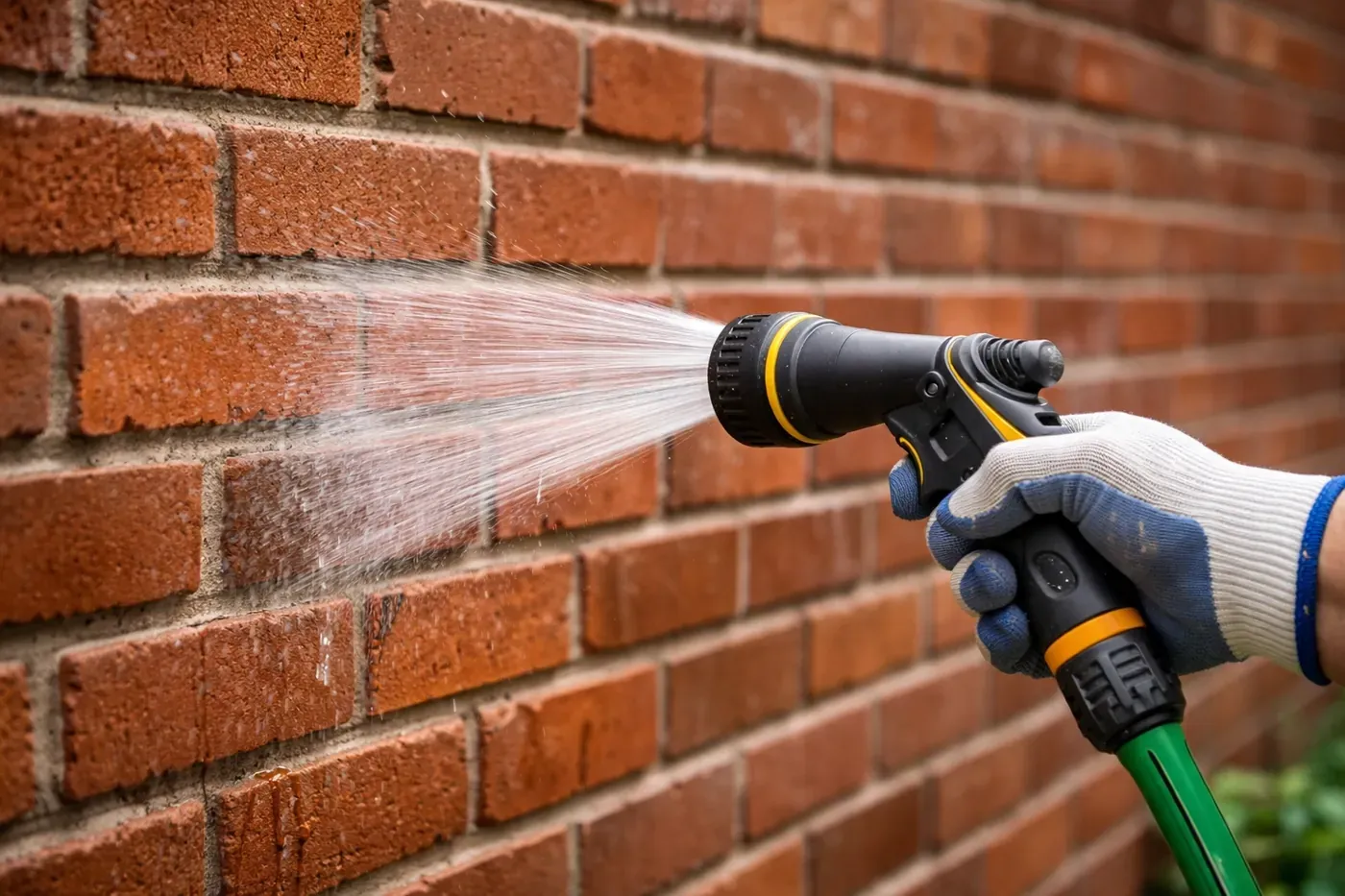
Before repointing or patching, many homeowners pressure-wash the brick to "prep" the surface. This is a mistake.
High-pressure water strips the fired outer layer of the brick (called the fire skin), exposing the softer interior to moisture penetration. Once that protective surface is gone, the brick absorbs water, freezes, expands, and spalls, sometimes within a single winter.
Similarly, acidic or abrasive chemical cleaners can etch the brick face and discolor mortar joints permanently.
The right method:
Use low-pressure water (garden hose pressure or a pressure washer set below 500 PSI)
Apply only mild, pH-neutral cleaners designed for masonry
Avoid wire brushes or abrasive pads on the brick face
Rinse thoroughly and allow the wall to dry before any mortar work
When a brick is too damaged to save, it needs to be cut out and replaced. Sounds simple, until you realize that matching brick is one of the hardest parts of masonry repair.
Dallas-area homes feature hundreds of different brick types, colors, and textures. Manufacturers discontinue lines. Colors fade over decades. A "close enough" replacement from the hardware store will stick out like a sore thumb and may even be structurally incompatible.
What to look for in a proper brick match:
Factor | Why It Matters |
Color | Must account for weathering and patina, not just the original fired color |
Size | Modular, queen, king, utility, dimensions vary by era and manufacturer |
Texture | Smooth, wire-cut, tumbled, sand-faced: each catches light differently |
Density | Older bricks are often softer; modern bricks may be harder and behave differently |
At Champion Brick Repair, we maintain an extensive inventory of salvaged and specialty brick specifically for matching Dallas-area homes. Our brick crack repair process includes professional color and texture matching so repairs blend seamlessly.
Repointing (also called tuckpointing) requires removing the old, damaged mortar before applying new material. Do this wrong and you'll crack the bricks themselves.
Common errors include:
Using a power grinder carelessly : One slip and you've chipped the brick edge permanently
Removing too little mortar : New mortar needs at least ¾" depth to bond properly
Removing too much mortar : Gouging deep into the joint destabilizes the brick above and below
Leaving debris in the joint : Dust and loose particles prevent adhesion
Tip: Hand tools (cold chisels, joint rakers) are slower but far safer for DIY work. If you use a grinder, use a thin diamond blade and keep it centered in the joint: never touch the brick face.
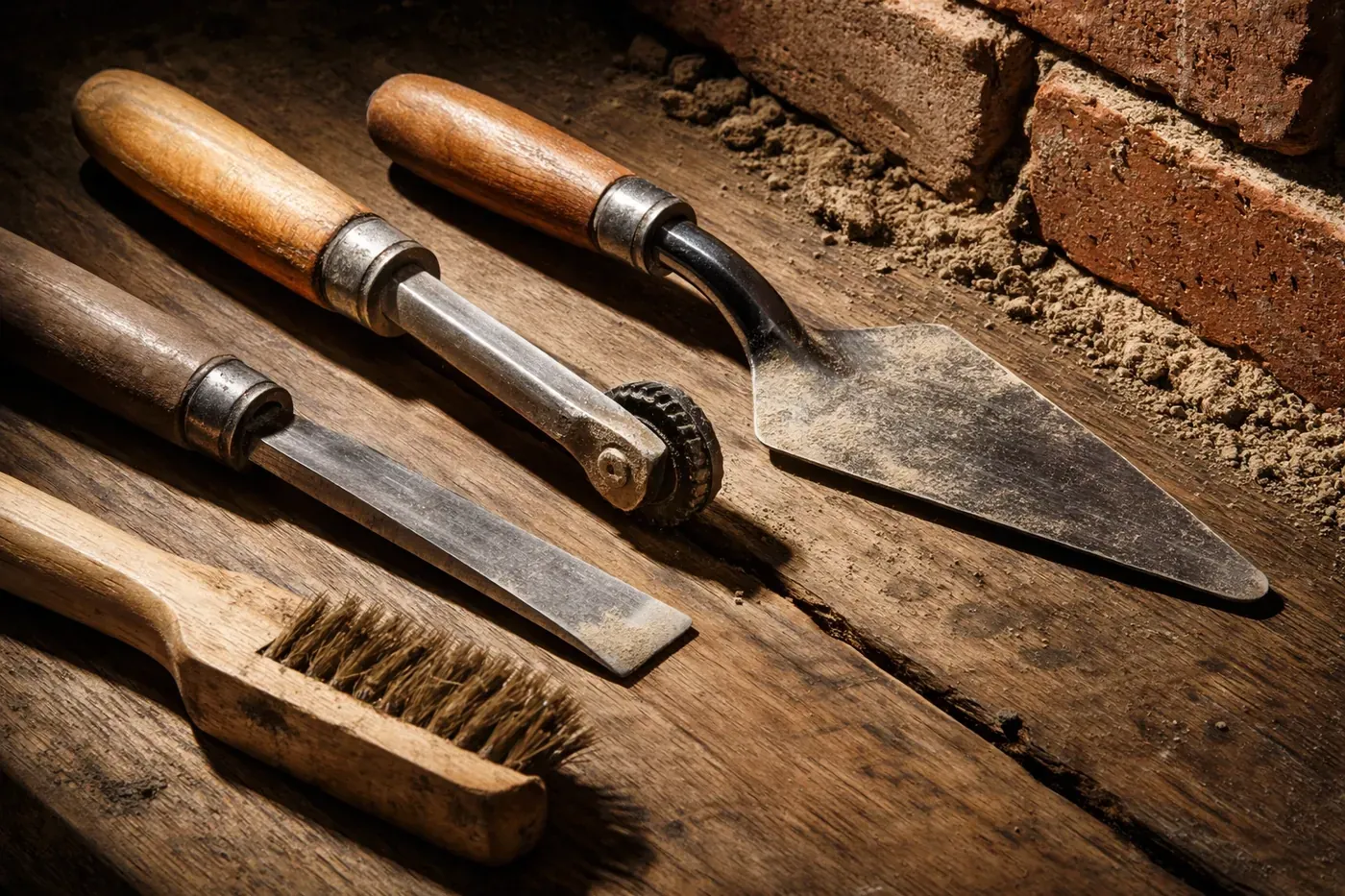
Proper joint depth, clean surfaces, and correct mortar application are non-negotiable for a lasting repair.
Water is brick's worst enemy. And in many cases, cracks in brick and mortar trace back to failed flashing or blocked weep holes: not structural problems.
Flashing is the metal or membrane material installed where the brick meets rooflines, window sills, door headers, and the foundation. When flashing fails (or was never installed correctly), water enters the wall cavity, saturates the mortar, and causes cracks from the inside out.
Weep holes: the small gaps at the base of brick walls: allow trapped moisture to escape. When they're clogged with mortar droppings, dirt, or insect nests, water backs up behind the brick.
Checklist before repairing cracks:
Inspect flashing at roof lines, window heads, and wall bases
Confirm weep holes are open and spaced no more than 24" apart
Check that gutters and downspouts direct water away from the foundation
Look for efflorescence (white salt deposits): a sign of moisture migration
Fixing visible cracks without addressing water intrusion is a temporary fix at best.
Some brick repairs are genuinely DIY-friendly: filling a small mortar gap, replacing a single missing or spalling brick, cleaning light efflorescence.
But structural cracks, widespread mortar failure, lintel problems, and foundation-related damage require professional diagnosis and repair. The risks of DIY mistakes include:
Weakened structure from improperly applied mortar or uneven joints
Voided warranties on previous foundation or masonry work
Cosmetic damage that decreases curb appeal and resale value
Accelerated deterioration requiring full wall rebuilds instead of targeted repairs
Caution: A $200 DIY repair done incorrectly can turn into a $5,000+ professional rebuild.
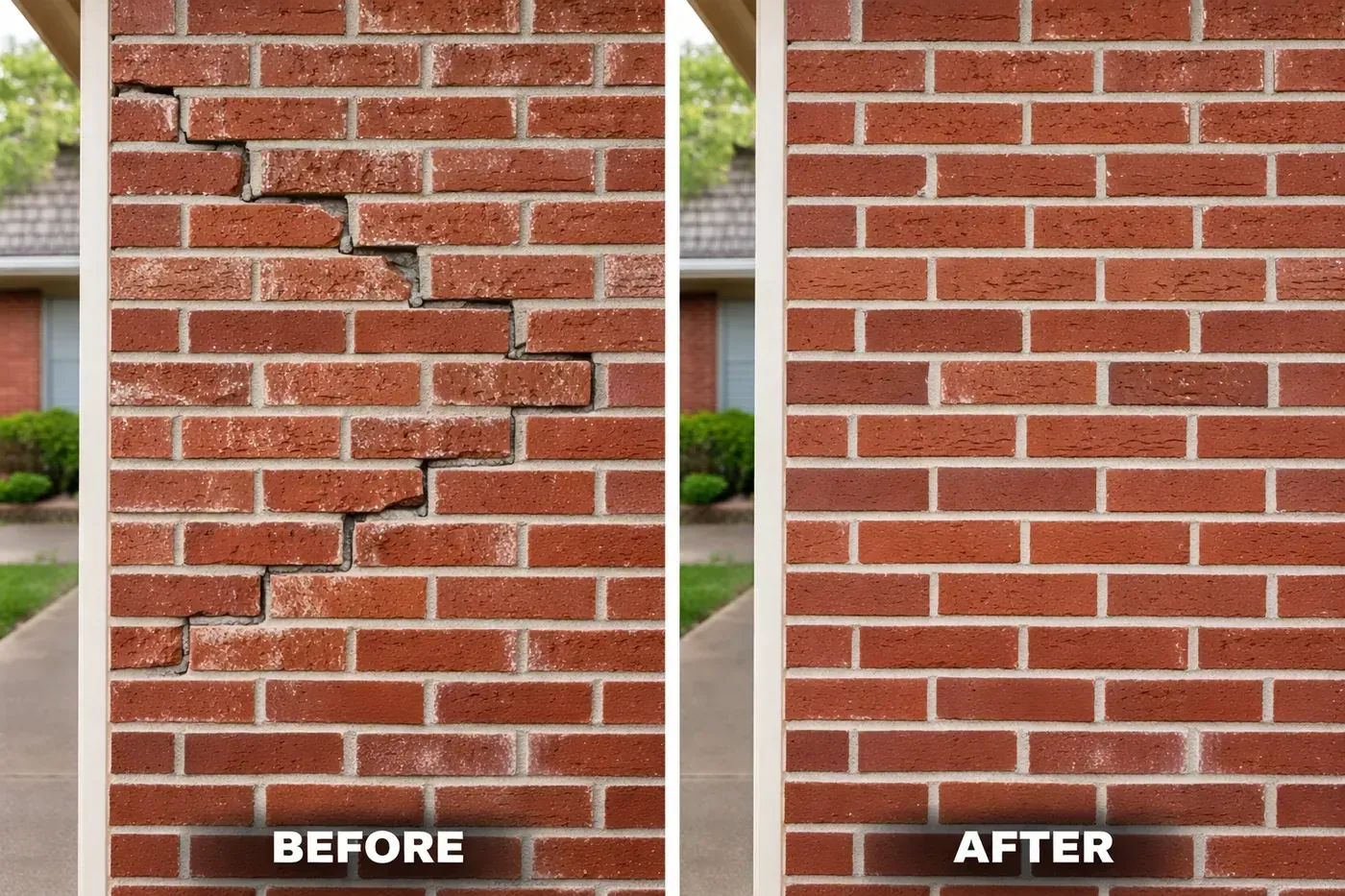
At Champion Brick Repair & Whitestone Construction, we developed the Champion Brick Repair System specifically for Dallas-Fort Worth homes. It addresses the root cause, matches materials precisely, and delivers repairs that last.
What's included:
Full diagnostic inspection : We identify why the crack occurred, not just where
Professional brick and mortar matching : Color, texture, size, and composition
Proper mortar removal and joint prep : Hand tools and precision grinding
Correct mortar formulation : Matched to your existing brickwork
Flashing and drainage check : We don't patch over water problems
Lifetime Warranty : Because we stand behind our work
Whether you're dealing with cracked brick in Dallas, Plano, Frisco, or Allen, we've seen it: and fixed it: hundreds of times.
If you've got brick cracks and you're not sure whether it's a DIY job or something bigger, give us a call. We'll take a look, explain what's going on, and give you an honest recommendation: no pressure.
Call or text: (817) 523-1540
Or contact us online to schedule a free estimate.
Don't let a small crack become a big problem. And definitely don't let a well-intentioned DIY repair make it worse.
Cracks are ugly — let Champion Brick Repair fix them right, with mortar matched to your home and a lifetime warranty.