October 1, 2026 · By Abraham Wix-Expert
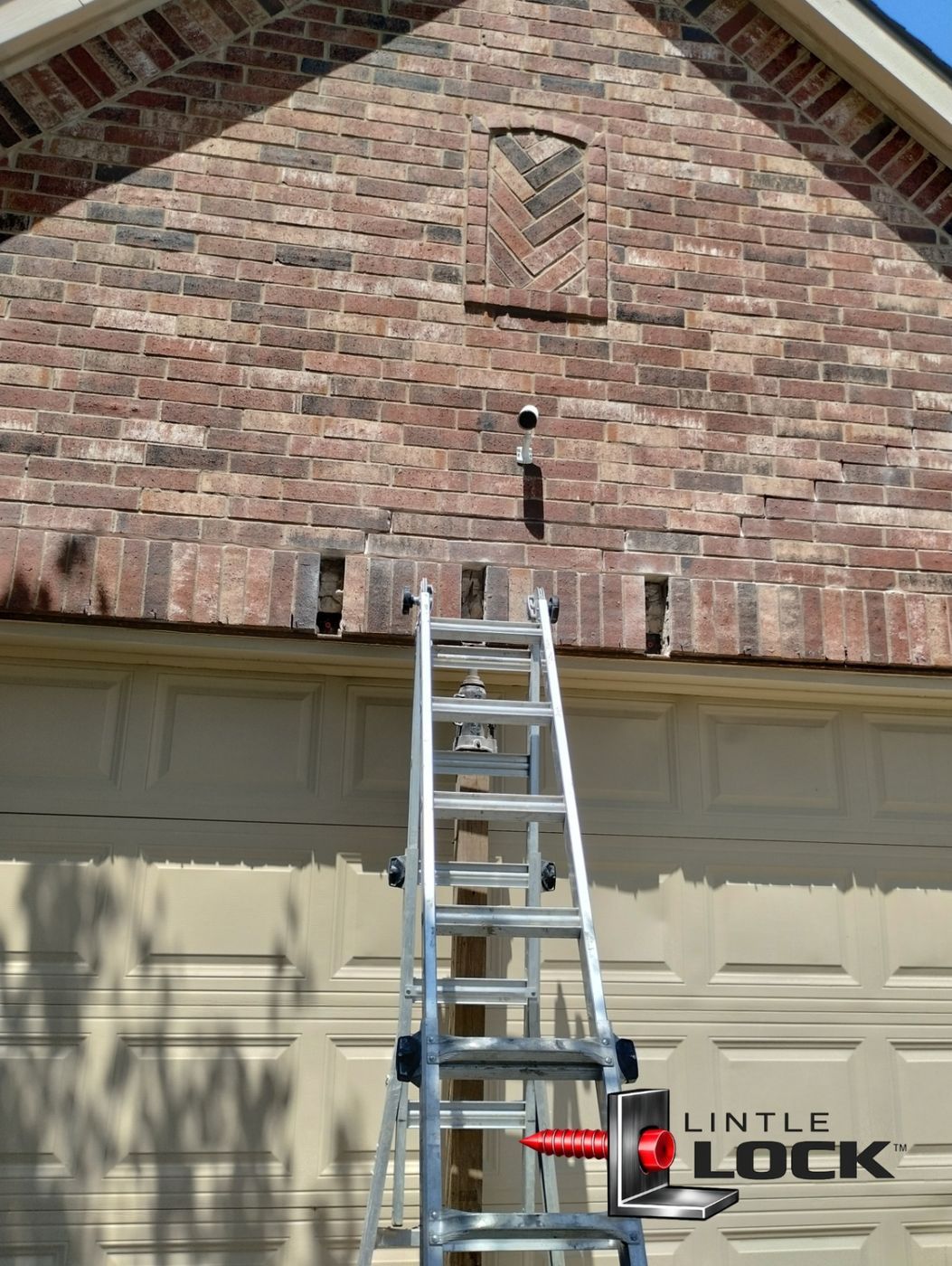
North Texas masonry has to handle intense heat, sudden temperature changes, expansive clay soil, moisture, and decades of movement. When brickwork cracks or shifts, a surface patch rarely solves the full problem.
Champion Brick Repair & Whitestone Construction provides advanced brick repair in Dallas, structural masonry stabilization, garage lintel repair, brick and mortar matching, and insurance-backed repair throughout Dallas–Fort Worth. Whether you own a home in Lakewood, the M Streets, Oak Cliff, Southlake, or a historic property near downtown Dallas, begin with the failure mechanism, not just the visible crack.
Brick veneer is durable, but it is not flexible in the same way wood framing and steel are. Seasonal expansion, foundation movement, corrosion, water intrusion, impact, and improper original construction can all place stress on a masonry wall.
Common warning signs include:
Stair-step cracks near a garage door or window
Horizontal cracks beneath a row of brick
Rust staining or displaced brick around a steel lintel
Mortar joints that have opened or crushed
Brick pushed outward from the wall plane
Spalled brick faces caused by moisture and freeze-thaw exposure
Cracks that return after repointing
A leaning, cracked, or damaged brick mailbox
The Brick Industry Association Technical Notes provide technical guidance on brick veneer, lintels, movement, flashing, and masonry detailing. Apply those principles to the actual condition of your wall. Do not treat every crack as the same repair.
A steel lintel spans a garage-door opening and supports the brick veneer above it. In many Dallas-area homes, the problem is not simply that the lintel has sagged downward. The steel angle begins to rotate outward and twist under the weight of the masonry.
This condition is known as Rotational Lintel Failure.
When the steel rotates, it can lose contact with the structural header behind the brick. The masonry above the opening then begins to move, producing:
Stair-step cracking
Crushed mortar joints
Sagging brick courses
Separation between the veneer and structure
Open joints near the ends of the lintel
Progressive displacement above the garage door
The core issue is rotation and torsion, not just cosmetic cracking.
A standard angle-iron repair can become a band-aid when it does not correct the torsional twist. Simply pushing brick upward, adding mortar, or installing additional steel may leave the original lintel free to rotate.
“Do not confuse lifting the brick with correcting the lintel. If the steel is still rotating, the masonry can crack again.”
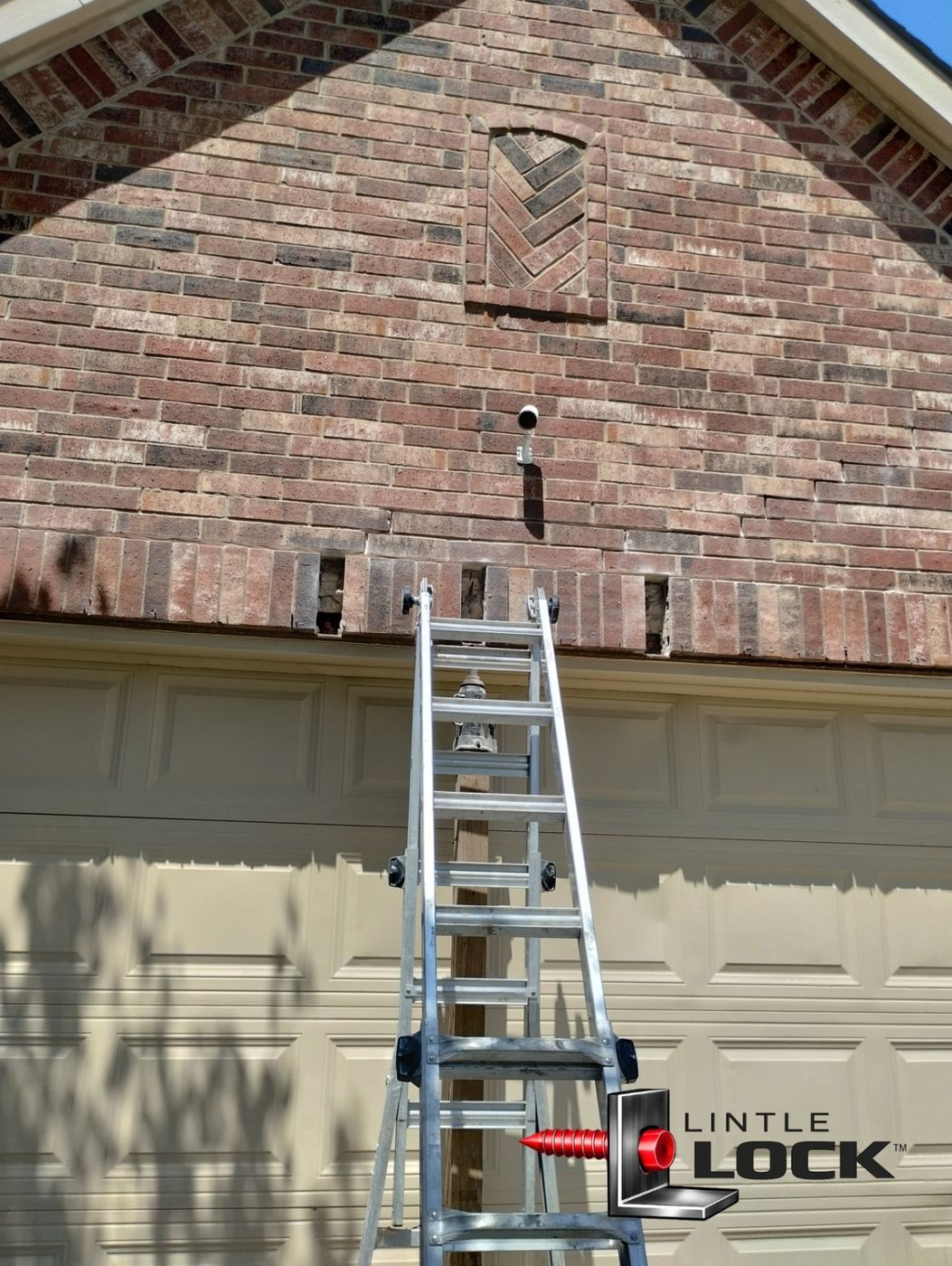
The proprietary LintleLOCK system is designed to reverse rotational sagging by returning the existing lintel toward its proper structural position and mechanically securing it to the structural header.
The repair generally includes:
The LintleLOCK Engineering Manual and White Paper emphasize the same mechanism-first approach: correct the rotation, stabilize the support, and restore the masonry.
LintleLOCK is the ONLY permanent, patented system for sagging lintels, and it is backed by a lifetime warranty.
We don't just patch; we lock.
If you are researching garage lintel repair cost, avoid comparing estimates based only on the number of visible cracks. The price depends on the structural condition and the amount of masonry that must be removed.
Important cost factors include:
Width of the garage opening
Amount of rotational sagging
Degree of torsional twisting
Corrosion or deformation of the steel
Number of bricks requiring removal
Access to the structural header
Brick availability and matching difficulty
Extent of mortar and veneer damage
Historic restoration requirements
Engineering, permit, or insurance documentation
A LintleLOCK repair can often be less disruptive than a full lintel replacement or complete rebuild because the process may preserve the existing steel and limit brick removal. A full rebuild becomes more likely when the lintel is severely corroded, incorrectly sized, badly deformed, or unable to provide adequate bearing.
Caution: Do not choose the lowest price if the proposal only fills cracks. Ask whether the contractor is correcting rotational movement, explaining the anchoring method, identifying replacement materials, and providing a written warranty.
A repair can be structurally sound and still look poor if the replacement brick is visibly different. Professional brick matching requires more than finding a similar red or tan color.
Evaluate the complete masonry profile:
Color variation across the wall
Brick dimensions and coursing
Surface texture
Edge shape
Firing characteristics
Weathering and fading
Mortar color and aggregate
Joint width and tooling
Bond pattern
Orientation of the replacement brick
Older Dallas homes and historic buildings often require additional care. Original brick may no longer be manufactured, and the existing mortar may be softer than modern high-strength mixes.
Do not use an overly hard mortar simply because it is convenient. A mortar that is too strong can transfer stress into older brick faces and accelerate damage. Match the existing masonry’s age, porosity, joint profile, and exposure.
Champion Brick Repair & Whitestone Construction matches existing brick, stone, and mortar for residential, commercial, historic, and insurance-related repairs. The goal is a durable repair that does not leave an obvious patch on your front elevation.
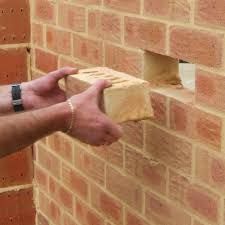
If you are searching for brick crack repair near me, document the damage before anyone starts grinding or filling joints.
Take photographs from several distances. Note whether the crack is widening, whether bricks are displaced, and whether nearby doors or windows stick. Check for rust, efflorescence, water stains, open joints, or cracks that continue through multiple courses.
Don’t fill a structural crack before identifying its cause.
Don’t assume every garage-door crack is foundation settlement.
Don’t cover displaced brick with caulk or paint.
Don’t install a visibly mismatched brick on a prominent façade.
Don’t grind out sound historic mortar unnecessarily.
Don’t ignore water entry around chimneys, arches, or lintels.
Don’t accept a repair that provides no explanation of the structural correction.
Advanced masonry repair includes more than garage openings. Champion Brick Repair & Whitestone Construction also provides:
Brick repair and masonry services
Brick crack repair and mortar joint repair
Brick mailbox repair in Dallas, TX, including matching brick, inserts, address blocks, and flags
Brick arch repair for cracking or sagging arches
Missing and spalled brick replacement
Chimney mortar cap repair and repointing
Complete chimney replacement when necessary
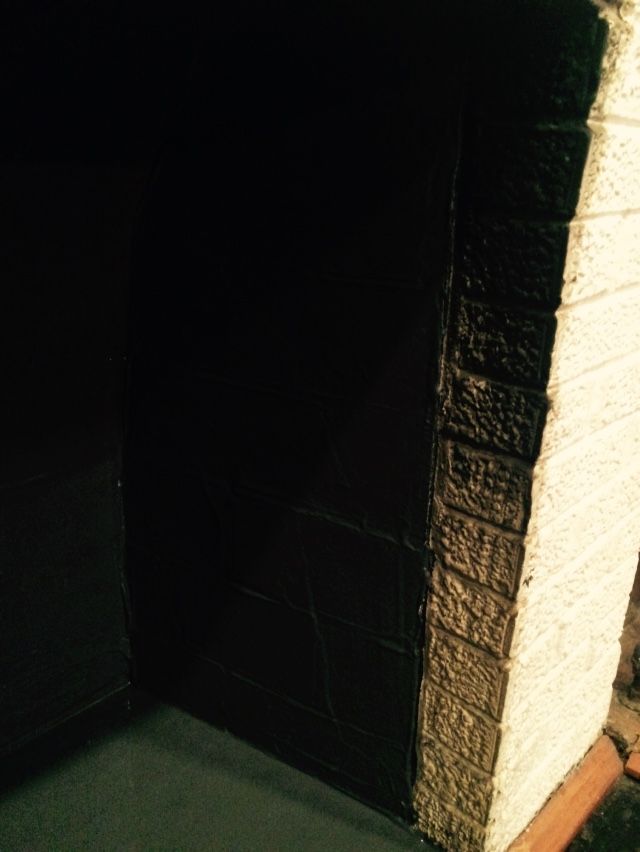
Firebox repair and resurfacing
For property managers, engineers, and owners preparing for an inspection or sale, accurate documentation and reliable material matching matter. Champion Brick Repair & Whitestone Construction works with all insurance carriers to help make covered masonry repairs more seamless.
Do not wait for a small crack to become displaced brick, water intrusion, or a larger structural repair. Champion Brick Repair & Whitestone Construction provides expert masonry repair in Dallas, TX, with precision matching and a lifetime-backed Champion Brick Repair System.
For garage lintel repair, brick crack repair, brick mailboxes, arches, chimneys, fireboxes, and insurance-backed masonry services:
Call (817) 523-1540
Visit championbrickrepair.com
Request a quick and easy free online estimate
Leave feedback on our Google Review page
Champion Brick Repair is a division of Whitestone Construction, Hamilton, Texas, and is not affiliated with any other companies using similar names.
Cracks are ugly — let Champion Brick Repair fix them right, with mortar matched to your home and a lifetime warranty.